

EP. 42 – Hybrid Cloud Unplugged: Understanding Azure Local with Kristopher Turner
EP. 42 – Hybrid Cloud Unplugged: Understanding Azure Local with Kristopher Turner
About This Episode
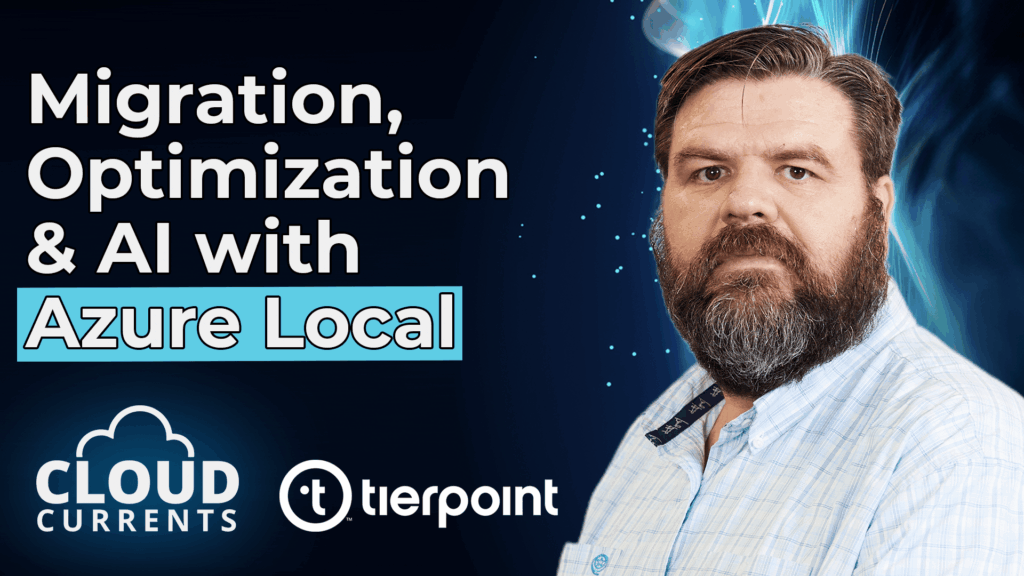
In this episode, we speak with Microsoft MVP Kristopher Turner, Product Technology Architect at TierPoint, about navigating VMware licensing changes under Broadcom. He highlights Azure Local as a strong hybrid infrastructure option, shares strategies to avoid lift-and-shift pitfalls, and explores using AI and GitHub Copilot for automation. The discussion covers cloud cost optimization, repatriation realities, migrating legacy apps, and lessons from failed migrations, offering practical advice to maximize hybrid cloud investments.
Know the Guests

Kristopher Turner
Microsoft MVP in Azure, Microsoft Certified Trainer (MCT), and Product Technology Architect at TierPoint
Kristopher Turner is a Microsoft MVP in Azure, Microsoft Certified Trainer (MCT), and Product Technology Architect at TierPoint, specializing in hybrid cloud solutions and Azure Local. With over 20 years in technology, he’s an expert in Azure Arc, Kubernetes, and disaster recovery strategies. A former VMware professional turned Microsoft advocate, Kristopher brings deep experience bridging on-premises and cloud environments. Outside of tech, he enjoys farming and woodworking.
Know Your Host

Matt Pacheco
Sr. Manager, Content Marketing Team at TierPoint
Matt leads the content marketing team at TierPoint, where his keen eye for detail and deep understanding of industry dynamics are instrumental in crafting and executing a robust content strategy. He excels in guiding IT leaders through the complexities of the evolving cloud technology landscape, often distilling intricate topics into accessible insights. Passionate about exploring the convergence of AI and cloud technologies, Matt engages with experts to discuss their impact on cost efficiency, business sustainability, and innovative tech adoption. As a podcast host, he offers invaluable perspectives on preparing leaders to advocate for cloud and AI solutions to their boards, ensuring they stay ahead in a rapidly changing digital world.
Transcript
00:00 - Kristopher's Career Journey
Matt Pacheco
Hello everyone and welcome to the Cloud Currents podcast where we explore the strategies and technology shaping the future of cloud computing and security. I'm your host Matt Pacheco and I lead the content team at TierPoint, and I help businesses understand cloud trends to better help them make decisions about their IT strategy. In today's episode, we'll be diving deep into the world of hybrid cloud and exploring how organizations can bridge the gap between their on prem and cloud services. We're joined by Kristopher Turner, a Microsoft MVP in Azure and product technology architect at TierPoint. Kristopher has over 20 years of experience in the tech world. He's become a recognized expert and in hybrid cloud architectures, particularly with Microsoft's Azure Local, formerly known as Azure Stack.
He's also knowledgeable in Azure ARC and hybrid infrastructure solutions and he's also a sought-out speaker and thought leader in the space and he brings extensive hands-on knowledge from everything under the sun. In our discussion today, we'll explore kind of the evolving landscape of the cloud, the impact of recent industry changes, specifically with Broadcom VMware strategies for cost optimization, the integration of AI into the cloud and cloud management and infrastructure, and also discussing practical approaches for migrating legacy apps and all that great stuff that comes with cloud migration and managing today's modern cloud landscape. So thank you for joining us today, Christopher. We're really excited to have you on.
Kristopher Turner
Thanks for having me. I'm looking forward to it.
Matt Pacheco
Sweet. So let's jump into it. I love to ask this question. It's, can you walk us through your career journey from where you started to where you're at right now?
Kristopher Turner
Oh boy. Had in third grade. No, I'm just kidding. Let's see, I started actually. Oh man. I was working at America Online in Albuquerque, New Mexico as a Texas Fort person and I heard an advertisement for this company that would insert, you know, specific kind of Internet material. And I was like, you can't censor Internet material. You know, you can't filter it out. So I joined that, that ISP and I started using it and it was a good isp. It was a, it was family friendly. It had a lot of good sensor things going on. But I would always have issues because I started using them as a hosting company too. I'd always call the support and finally support called the local franchise and said, hey look, this guy knows more than us. You need to hire him.
So I got hired by these companies, left AOL and Gateway 2000, went down to this Little tiny mom and pop shop. There was like 15 different franchises for this company. And the guy took me under his wing, taught me all about NT4 and radius and how to configure use robotic use, robotics, modem pools. And so that's where my start in it came was nt 4o days and. And it kind of just went from there. I left there, went to different. Actually became a VMware guy. I got certified in a VMware certified engineer role back in the 2005 time period. So it was probably like VMware 4.0, 4.5 kind of old, really old school VMware stuff. And then I joined the dark side. I moved over to Microsoft, started using SMS 2003 Scom.
Actually it was mom back before Scom and that's how I got kind of the Microsoft path. As that progressed that got me into the cloud because some of the services moved to the cloud and where I came today using more hybrid touch, Azure Local stuff. I started with Azure Stack Hub, which was called Azure Stack at the time. And I moved over to Azure Stack Edge. I was doing a lot of IoT modules, learning a lot of AI cognitive services on the edge mainly because I would do demos, I lived on a farm and I would fly my drone out and I would, I wanted to see where sheep were.
And at the time there was a famous TV show on Silicon Valley called Silicon Valley or something and they did this thing and Microsoft did a spiff off called Hot Dog or not Hot Dog and they would identify was Hot Dog or not hot Dog. Well, I did the same demo but I did it a sheep or not a sheep. And that's how I started getting into more of the carbon service AI on the edge kind of thing. And that's kind of progressed me into the natural pattern of razor tech Edge to Azure Stack HCI to Azure Local. And with a huge background and a lot of large what lies underneath all these technologies and that's Hyper V Windows Server storage space is directed on that.
06:30 - What is Azure Local?
Matt Pacheco
That's a really cool progression of your career and working on various different companies from and then learning the VMware side and working with Microsoft. So I would love to talk about Azure Local. That's something we don't talk about as often. A lot of our episodes are focused on kind of public cloud. So we're talking about constantly at AWS Azure. But I'd love to dig into this aspect of the hybrid cloud because a lot of businesses are using the hybrid cloud, they're not just in one cloud so can we set the stage? Can you explain what Azure Local is and how it differs from other traditional cloud or on-premise solutions?
Kristopher Turner
Yeah, so Azure Local in a nutshell is basically a distributed solution from Microsoft that is managed by the Azure ARC management claim. So it's you take Hyper V, you take Storage Spaces Direct and you take the on prem solution that they had with Windows Storage Spaces Direct and then you add the integration to Azure. That's Azure Local. You're able to manage that solution through the Azure portal and it runs specific Azure services on top of what they now call Azure Local used to be called Azure as you mentioned earlier, formally Azure Stack hci. So it's basically a solution that is nearly fully managed from Azure, providing specific Azure services on prem where you might need those services because you have some kind of restrictions that you can't move to the cloud.
You might have some data sovereignty, things like that you need to stay on prem, but you still want to be able to take advantage of some of those Azure services as well.
Matt Pacheco
So you talked about some of you just spoke about some of the reasons people would want to keep certain things on prem. What are the key benefits of a hybrid approach versus going all in and public cloud or staying all in on prem?
Kristopher Turner
Some of the benefits of course of not being able to, you can't go all the way into the cloud. You might have some archaic applications that can't, that aren't cloud native or just can't be migrated to the cloud. You might have a data source that is still running on sans that you can't access from the cloud. You need that. You have that latency issue. So if you're running apps in the cloud and you need to access that data that's still on prem. So what you, the hybrid approach would be more like you bring some of those Azure services down AKS for one instance and you start cloud native, find your local applications running on Azure local running aks but still have that full access and that local access to all that data that can't be migrated at the time.
That is one way of what I would consider hypercloud. You can't just lift and shift because there's data reasons and you still want that capability. Of all the cool new toys that come with Azure or aws, things like that. But you, so you don't really want to stay fully on prem. So that hybrid mixture of being able to have those cool Azure services on Prem but also not being fully in the cloud because you have data or specific reasons, you can't move to the cloud.
Matt Pacheco
So we talked about some of the big benefits of moving to the hybrid cloud and the things you see there. What are some of the biggest challenges we've seen as you're seeing companies trying to implement a hybrid cloud environment?
Kristopher Turner
I think with the hybrid cloud environment, some of the biggest challenges, one is, especially if you're migrating off of VMware, the knowledge that comes from that. If you're migrating coming to like a hybrid V environment or an Azure Local environment, even nutanix or any other hybrid cloud solution, you have a whole bunch of skill set around VMware and trying to come over and have that same skill set spread across any of those other platforms. They're not, they're not apples, they're Apple the oranges kind of thing. So it's the same kind of tool sets that you might use in VMware and the same way you support VMware and all that stuff you can't do with like your Hyper V clusters or your Azure Local clusters or nutanix. It's a whole different mindset when it comes to the knowledge base. So there's a learning curve there.
Matt Pacheco
Interesting. You just mentioned the changes for VMware and Broadcom. We've seen some significant changes in the landscape because of those changes. And then VMware's acquisition or Broadcom's acquisition of VMware, what impact are you seeing on organizations currently running a VMware infrastructure?
Kristopher Turner
I see a lot of people who are worried about what their re ups are going to cost when they have to come to renew their license. There's a huge cost difference between what they were paying before and what they're going to be paying in the future. So that takes a bit. If you're a huge large company and you can handle the cost differences, that might not be an issue. But your midsize, the smaller markets, some of that cost increase is huge. And that's one of the biggest things that I hear about all the time, is we need to get a freemore because we can't afford it anymore. We love the platform. There's nothing wrong with it, we just can't afford it.
10:22 - VMware/Broadcom Impact
Matt Pacheco
Yeah, that's a tough place to be in. So I'm sure they're looking for alternatives. We talked about Azure Local earlier. Can you tell me how Azure Local could potentially be positioned as an alternative for businesses looking to move away from a VMware infrastructure?
Kristopher Turner
Yeah. So Azure Local is a perfect example of being able to move from VMware. You have the capability of running Underneath Hyper V, which when you compare Hyper V services and Hyper V alone with like ESXi and things like that performance is neck to neck. The only differences that you're going to see is some of the terminology that you're going to use. Some of the features that you might have come from VMware side aren't either there or it's a different way to do it in Hyper V. But overall Azure Local provides that same hypervisor, filling the same on prem solution. It adds more to it because now you can manage and use Azure resources, Azure services on top of all those services that you used to. But at the end of the day it comes down to the hypervisor.
It comes down to being able to make sure that your workloads are fully, highly available, that the storage is resilient, all that other stuff. And apples, the apples. When you're comparing those two Hyper V, Azure Local is a perfect platform to land on from VMware. Like I mentioned earlier, there might be a little bit of learning curve on how to manage everything from Azure versus from vcenter or things like that, but Azure Local is a great platform to land on.
Matt Pacheco
Are there any like tips or tricks you could give to businesses kind of evaluating whether they want to stay where they are or move to another platform?
Kristopher Turner
Yeah, there's one situation where we had a client that was really interested in Azure Local. But the biggest fear of course, is the knowledge transfer of how they're going to manage everything. There is a capability to install, use Azure Arc for vcenter. And what I would tell people is if you want to get your people used to how you're going to manage VMs and stuff in the cloud, there's a way you could deploy Azure Arc for VCenter, which brings all those resources from VCenter into Azure and it kind of looks exactly like you would just manage the same way you'd manage an Azure Local cluster, except you're managing a VMware cluster in the cloud. So that gives your user base, your technicians, your engineers that kind of knowledge to be able to see, hey, this is how we're going to manage VMs.
This is how we'll deploy VMs. This is kind of the services we could use. That kind of gives them a heads up, a little comfort. So when they do migrate over to a Hyper V or an Azure Local solution, it's a lot easier to buy, to take hold of and manage.
Matt Pacheco
Nice. You talked a little bit about one of the challenges of being skills, but also we hear this challenge and it's not just with this change in the landscape in general with cloud. Cost control and cost optimization is a huge challenge and one of the promises of the hybrid cloud is potentially improving some of that cost optimization strategy, potentially if you do it right. So my question to you is what strategies have you found the most effective for controlling and reducing cloud spend?
Kristopher Turner
Cost optimization tools, of course in Azure are great. Setting budgets, setting alerts, knowing what you're spending is huge when it comes to Azure spending. Knowing and understanding that you could spin up not just in Azure Local and not just hybrid cloud, but you could spin up specific VMs and stuff that like reservation and buy reservations for VMs, things that will keep your prices down. Knowing what SKUs you're going to deploy in Azure, when it comes to like different services, knowing what costs more if you need that whole feature set or not. If you only need a small feature set, don't go for the bigger sku, go for the smaller sku.
In Azure Local, there's not much of a cost management, I would say when it comes to cost optimization, you either you pay the specific $10 a month for each core or if you use Azure Hybrid benefits, it's free. AKS is free on Azure Local. A lot of the features that you get with Azure ARC are free on Azure Local. So you get like the update management, the configuration management, all these other features that you would normally pay extra for you. The extended support is free on Azure Local. So those are things that are nice when it comes to Azure Local, but there's not a lot of cost optimization that you could do outside of what you can do with cost optimization in Azure, period.
Matt Pacheco
Are there any best practices that you would give to companies looking to optimize their costs?
Kristopher Turner
That's a good question too. Yes. So I mean like we mentioned, were talking about the cost optimization tools in Azure, making sure that we have budget set and making sure that specific people have only specific rights to deploy specific services because there's other organizations you walk into and they're like, hey, we got a $20,000 bill this month because somebody enabled Defender for Cloud and Sentinel and install the log analytics agent and started importing tons of logs, you know, without having those logs transformed or limited to how much log data could come in. So there's having that control over your users and what they could deploy as well in your public cloud as well. It's huge. Not being surprised sticker shocked when you get that $20,000 log analytics data ingestion cost.
Matt Pacheco
Absolutely. So over the last few years, companies have Been sometimes based on cost, repatriating workloads from the cloud, from public clouds back on prem. Do you see that as something that's happening often? Is cloud or are cloud costs driving that? Is that actually happening? I guess is the other thing because I've heard conflicting reports. I heard that it's happening and I heard that people are actually going back into the public cloud. What are your thoughts on that as it relates to costs and like that? Do you see that happening?
Kristopher Turner
I see that happening only when people do a lot of lifting and shifting and not planning out a well cost optimized plan ahead of time. They lift and shift and they just leave that alone and then don't deal with either modernizing network load into like something cloud native that might be cheaper or using VMs that are way too big for their workloads. That's the number one reason why people I see people holding back to on Prem is because when they moved to the cloud they were promised this and this and sometimes they didn't do exactly what they're supposed to do and the cost escalated even bigger than it was on prem. Or some people just might move to the cloud and then they realized that the stuff that they need to run was a little more expensive on the cloud.
What the problem is I see people moving back, but I see just as many people moving up. So it's not a huge hey, we're running away from the cloud kind of thing. It's kind of a, as many people done moving down, that's probably more people moving up. So there is people moving back down for specific cost reasons.
Matt Pacheco
But yeah, and I'm sure it's more than just cost too. There's control, there's data, there's at certain applications and with like specific like.
Kristopher Turner
Things like a lot of European friends of mine are trying to pull out of the cloud because of specific sovereign going on. Some of the political like cloud act things that were passed, people are worried about having their data, you know, having other people access to the data because of legal reasons. And some people are moving up from the cloud for that reason. Not a lot, but some people are. Some people are just worried about people having access to data that they don't think they should. But you know, that's rare. Rare cases.
18:52 - AI in Infrastructure Management & Challenges
Matt Pacheco
Yeah, the outliers. Let's talk a little bit about AI as well since that's the hot topic. Everybody's talking about AI. Yay. We, we talk a lot about it from a director, not direct Developer perspective. A lot of guests talk about the benefits of AI for coding and all of that, but I'd like to speak about AI from like an infrastructure management perspective as well. And do you see AI affecting the way we approach cloud infrastructure? Do you see it now or do you see it coming in the future?
Kristopher Turner
Well, I see it now. I, I. A few months ago I started getting into what they call code vibing. I guess you guys call, you know, through AI. I thought it was a joke. I didn't realize code vibing was an actual real term. So until I went to a conference in May and I had some friends demo this solution they're building as they were using VS code GitHub copilot chat. So I started using that and that's how I start. I don't leave VS code anymore. Like everything I do is in VS code. I'm constantly using GitHub Chat or GitHub Copilot Chat. I'm building automation for a lot of the things that we're doing here. Checkpoint using AI it's gotten a lot better from the last few years.
You still have to know what you're doing because you still have to double check some of the code. But it's come a long way and the more these modules are being released, updated, the more intelligence they're becoming. In some ways it's making my job easier. I could tell GitHub Copilot that, hey, I want to deploy a key vault in Azure. I need to make sure that it's only on private influence. I need to make sure that only specific accounts can have access and this and that. I need to have a BICEP deployment version of it. I also need to be able to use Terraform and Ansible too. And I let it run. And in 90% of the cases, as long as my prompts are good, it does really good job at building those BICEP solution and the ansible and the terraform.
And 99% of the time if I try deploying it works. I'm pretty surprised.
Matt Pacheco
Are there any limitations or challenges you've encountered with using these tools?
Kristopher Turner
Yeah, I'm going to do a selfish plug, but I'm speaking on this exact thing. At the Cloud Summit in Branson in September. It's CheerPoint sponsored. But basically I tell people that working with AI in this environment is like working with a toddler. If you, if you're not telling, you could tell it a toddler to ho go walk across the yard, get me that ball and come back. How Many times will that toddler walk across the yard, bring the ball back to me exactly the way I tell it, you know, you have to tell that toddler, okay, stop. Don't look to the right, don't look to the left. Ignore the squirrel, ignore the puppy. Keep walking, keep walking, get the ball, turn around, come back to me. And same with AI, especially with specific modules.
You could tell it to do something and sometimes it just goes crazy. Like, I'm trying to get the document what we just deployed, and it does a great job at documenting. But Then also there's 15 other documents that are. I mean, the documents are great, but it goes off on a wild use chase. If you're not telling it exactly how to give it specific instructions, it could, it could frustrate you really bad. That's why I say that's why I like to configure AI with the toddler.
Matt Pacheco
Yeah. No, it makes a lot of sense even from a marketing perspective when I use it. And I'm usually prompting dozens of times in some instances to get what I want, I still have to watch over it like I watch over my kids. So I completely get the metaphor. Really cool. How do you see AI evolving in the context of cloud management over the next few years?
Kristopher Turner
That's a good point. I know with Azure, there's like the copilot for Azure and things like that. So right now you could do simple queries and find out, hey, this service is having issues and it'll come back and tell you exactly. I see it more evolving into helping you do fully automated solutions, kind of like what we do with code vibing. I see it being able to be more of like a level one kind of help desk, level one kind of support, you know, junior admin kind of thing, where you might be able to do some of those repetitive tasks using AI over and over again without having to actually have somebody in that position to do that. But you still need somebody to manage and watch over the AI.
So that in my sense, it's not taking somebody's job, it's giving somebody a different job. Does that make sense? But it's going to help your overall organization move forward, especially with infrastructure as code and being able to maybe help with craft optimization in the long run. Say, hey, how's this setup? Save me money, you know, kind of thing.
Matt Pacheco
Yeah, I mean, the large language models from like ChatGPT or others, you can ask them, like, how do I manage my family budget? I'm sure as we get more advanced and we get better Data do a better job of doing that for businesses. And if it can. Already some people do some wild things on the public ChatGPT tools as they're learning.
Kristopher Turner
Cool.
24:51 - Legacy Application Migration
Matt Pacheco
So I wanted to switch gears a little. I want to talk a little bit about cloud migration. It's going to get a little into Azure Local again, veer from our AI fun. Maybe a little bit about legacy applications as well, because we find that a lot of businesses have these applications that they want to move to the cloud, but they weren't necessarily designed for the cloud. How do tools like Azure Local and others help address that kind of challenge?
Kristopher Turner
That's a good question. So with Azure Local, it'd be more of a platform that you can land on and develop your cloud native apps as you're able to run Kubernetes AKS locally and then not spend have that spend in Azure while you're doing that cloud native. Especially for old legacy apps that are local, using tools like Azure Migrate, that has a lot of different added connectivity to that to be able to, hey, can this app be cloud? Can this app be modernized while we migrate it? Things like that. Those are perfect tools to be able to modernize that old legacy app in that sense and then hit that platform of Azure Local to be able to run those cloud native apps until you're 100% sure that you're ready to move that to Azure as well.
Matt Pacheco
Very nice. So tools like Azure Local, which was just Azure Stack before, they're relatively new in the scene, comparatively traditional cloud migration kind of approaches. How do you modernize those approaches when talking about these new tools? Like what advice do you give to help people understand and modernize their approach.
Kristopher Turner
To cloud migration, to just Cloud public, cloud itself or to like Azure Local?
Matt Pacheco
Either one or both.
Kristopher Turner
So that's your migrating from like an environment like VMware to Azure or VMware to AVS Azure VMware Service or Azure Local, there's different things that you have to consider when you're migrating from like VMware to Azure. You're going to do a lot of discovery and a lot of what services are linked and all that stuff so you can migrate all these services together. That discovery is going to be able to give you an idea of what sizing of VM you're going to need in Azure. In Azure you go by skus, so you have specific SKU types that you have to. You could pick, you know, like D4, you know, D whatever and Azure Local. There is no SKU type in Azure Local.
You could have a VM that has one CPU and you know, 16 gigs of RAM and that's up to you, that's how you want to build that vm. So that kind of differs. So when you're using the same Azure migration tool to migrate to Azure Local, that kind of discovery processes are needed because you don't really, you're not really gonna, it's not gonna suggest you what size of Azure RSKU you need on Azure. It's still great to pull that data and know, hey, look, this VM's only running at this process level. It's only using this much memory. So you can still kind of scope your Azure Local VMs to match that. But it's not gonna automatically tell you that, hey, you need a D4 or an end something or E series in that sense.
So that's kind of the difference when it comes to migration to cloud versus migration to Azure Local. In essence, it's also not going to this kind of advanced tools that we talked about earlier, but Azure Migrate and other tools, of course, to migrate from VMware to the cloud could give you a little more insight to the services that are mapped. Things like that actually give you the ability to see of, hey, can I upgrade the SQL database to a different SQL database? Can I use a SQL managed instance instead of a SQL server database? You know, when you're migrating from VMware to the cloud and can I convert this to a container? This kind of app to container, all that stuff is available through Azure Migrate to Azure Public.
But some of those solutions aren't there yet just for anywhere to Azure Local at this point.
Matt Pacheco
Thank you. Fun question. Maybe not so fun for the people that experienced it, but you've worked in a lot of different companies in this space. What are some of the most common mistakes organizations make when doing a cloud migration? Specifically when they're migrating something like legacy applications?
Kristopher Turner
The biggest mistake I see is they believe that they're going to lift and shift and then they're going to cloud modernize right away. So they do the lift and shift process and they lift and shift everything up to Azure. And then years go by and they've not touched those archaic old legacy apps that could have been migrated to a native cloud app, which would have cost them, save them a lot more money. That's some of the biggest things that I see is the whole lift and shift and they're forgetting about it.
30:01 - Future Trends and Skill Development
Matt Pacheco
Let's talk about the future. What emerging trends in hybrid cloud or Cloud in general, are you excited about the most?
Kristopher Turner
Oh wow. What am I excited the most? That's a good question. AI, of course there's a lot of AI trends coming out, especially when it comes to some of those AI solutions that are going to be on prem versus you know, like machine learning and things like that you can now AI studio, things like that you could run on Azure Local. All these different services that are coming to Azure Local is, it's kind of exciting for those who don't truly need to go to the cloud. Then of course in the cloud, like the whole AI scene and the intelligence behind it. You know, I wasn't a big AI proponent before in the past or I said the right word for it, but anyway.
But the more I use it, especially when it comes to documentation and it being able to take what's in my head and what I write in notes and be able to actually form it to where people can actually read it and understand it, that's awesome. And it just keeps getting smarter and the tools that are available that are coming out from different providers and stuff, just the large language models and all that other stuff that are just, are getting more intelligent and more intelligent. In some ways it's kind of scary, but in some ways it's just kind of like, hey, where's the Jetsons? You know what I mean?
Matt Pacheco
But anyway, where are my flying cars? Yeah, the amount of time it saves is very helpful. Yeah, really interesting doing some of that work that were challenged with, but now it allows us to do other things, lets us be innovative and all that great stuff and use a different part of our brain, I guess. Very cool. So, so with everything changing, this whole landscape has changed in the last few years. How do you see this rapid pace of change changing the cloud world, specifically affecting like IT professionals and their skill development? Like how do you see that changing as well?
Kristopher Turner
Oh, and you know, I've been around for a while and you know, it used to be where you go get Microsoft, MCSA or MCSE certified and that was good for years, you know what I mean? You learn something, it pretty much every year there might be something new coming out that you might have to read up on. But now if you take a month off from something and you go back to it, you're behind. Especially when it comes to AI and other solutions.
Anything that's cloud native, even with Azure Local, you might stop working in Azure Local, you might walk away for a few months and you Come back And just the changes that Microsoft has done with Azure Local, if you're not on it and always keeping up to date and making sure that your knowledge, you're reading articles and you're tracking what's changing, you could be, you find yourself very behind very fast nowadays. It used to be so much easier to be a IT admin or engineer or an architect, but nowadays your job is your job but then you have a second job of education, otherwise you fall behind. A new job.
Matt Pacheco
Yeah. How, how can organizations I guess help their IT teams kind of stay on top of some of these changes?
Kristopher Turner
That's a good question because you know we always have that whole we're here for you kind of thing and a lot of companies are that they, they give their employees the time. I think the biggest thing is giving your employees time during their work hours to be able to catch up and not just read, but have some kind of environment where they could practice and demo and get hands on approach to some of these changes is huge for those employees. That there might be people who can't do that during their work hours so they have to do that on their personal hours, which is bad in my opinion. You shouldn't be doing some of this stuff in your personal hours when it comes to trying to catch up to what your job is.
So those companies that give their employee that opportunity to go to conferences for one thing, go to user groups, do things online, interact with other people, learn and if your company gives you that opportunity to do that's awesome. That's, that's huge. And not take it out of your own time.
Matt Pacheco
Awesome. So someone starting, we kind of talked about this a little bit, but someone's starting their career in it. What advice would you give them as they're starting in this brave new world?
Kristopher Turner
Jump in that water right away. No, just kidding. Just hurt. Like I said, the best way to learn is getting your hands on, you know, hands on if you don't have the means to come, if you don't have a company that's willing to give you some kind of AWS or Azure or any kind of subscription that there are other methods that you could do through Microsoft that gives you some free services. Now there's a lot of services on Microsoft that if you just create a tenant and you just create, you could create a phase, you go subscription or you create a free subscription and then there's a lot of services within Azure that are free. VMs that are free, services that are free. You get hands on with those things and you start building your knowledge based on that. That's what I would give.
There's some tools out there around demoing specific products, using some of the free services, find those kind of products out there, build your knowledge base around the free stuff is the key. Unless you could afford to pay a huge subscription cost for some of the bigger, more expensive stuff. But yeah, there's a lot of user groups out there to get all those to learn from. A lot of blogs, a lot of MVPs at Microsoft who blog and who are willing to share their knowledge. Slack channels, team channels, all that stuff, jump right in, find them, ask questions, no matter how dumb they might sound, ask them anyway. Yeah, that's what I would suggest for somebody coming into the IT world and then trying to pick an area.
Because right now there's, I mean it's so expand, you can't, you know, even with AI, there's so many sub areas with AI that you could pick. With security, there's so many areas of security. You go with Azure, infrastructure, Hybrid, all that other stuff, try to pick one and kind of focus on it and, and gauge your knowledge in that and then kind of migrate away from that as well and start. You know what I mean? Don't just try to jump into the water and try to do everything because that's gonna kill you.
Matt Pacheco
That's great advice. Yeah, definitely an interesting world to be jumping into, but needed skills are needed and it's a great place for opportunity. You mentioned you're a Microsoft mvp. I probably should have asked you at the beginning, what is that like, what is a Microsoft mvp and how do you achieve such a.
Kristopher Turner
So MVP is the most valuable professional and what happens is you do a lot of community work, blogging, speaking at community events, user groups, working with specific things on your own time, outside you see, outside of your work environment. And you get nominated easily by other MVPs, sometimes by Microsoft staff himself. They'll nominate you and say, hey, like this guy's gone above and beyond what other people have done. When it comes to the area, it doesn't mean that you're an expert at all. So I mean you could have the MVPs out there, that it's more about knowing and sharing the knowledge that you have. And that's what makes you an mvp, is based off the Microsoft technologies being able to go out and share what you learn. I mean you don't have to be extremely high and expert at everything.
Just if you know something, share it, blog about it. That's how you start. And then you just start building up on that. And that's what the MVP community is about anyway, is just sharing your knowledge. Some people think that MVPs know everything and they're like the gold standard, but we're not. We just know how to. We just love to share what we know. And that's how it starts. And then you get nominated for it.
Matt Pacheco
And then kind of like you're doing here.
Kristopher Turner
Yes, exactly.
Matt Pacheco
So we appreciate you, we appreciate learning from you today. And as we close out this episode, I have just one question for you and it's a fun one. But can you tell us about the event you're speaking at next month in September?
Kristopher Turner
It's the cloud Summit in Branson, Missouri. It's September, like 6th, 7th and 8th or something. It's like a Sunday, Monday and Tuesday. And I am going to be speaking my actual session title I just sent to our marketing and it's going to be called Prompt Persona Policy, AI Driven Infrastructure Code and VS Code. And it's basically the subtitle is Taming the AI Toddler with Prasima Powerful Prompts. And it's all going to be about my journey from how I started using AI to how I started using fight coding. I'm going to throw in some fun stuff where I'm going to have Pinky of the Brain Persona. So as I talk to the AI, it's going to respond back as Pinky of the Brain. Just fun stuff like that.
And then of course it goes into more real life demos of be able to build in a complete automated infrastructure code around AVD and deploying it live. Hopefully live. You know how demos do you so it is a cloud summit in Branson, Missouri and that is beginning of September and I'll be speaking at that specifically on this Copilot GitHub co pilot chat topic.
Matt Pacheco
That's so cool. I love your approach to talking about AI. It's funny. I would love to see a clip of the Pinky in the Brain thing because that's going to be hilarious. But thank you for sharing that and thank you for being on the episode today. I think we learned a lot about hybrid cloud and Azure local Azure arc. So thank you for taking the time today to speak with us.
Kristopher Turner
Thank you for having me. It has been awesome.
Matt Pacheco
Awesome. And to our listeners, thank you for listening in. Check out Cloud Currents anywhere you get your podcasts and Stay tuned for the next episode. We've got a lot more. Some more fun episodes coming. So thanks for listening and have a great day.