


Ep. 43 Enhancing DirecTV: AI, Cybersecurity, and Lessons in Corporate Separation with Manish Khadiya
Ep. 43 Enhancing DirecTV: AI, Cybersecurity, and Lessons in Corporate Separation with Manish Khadiya

About This Episode
Join host Matt Pacheco as he sits down with Manish Khadiya, VP of IT Enterprise Architecture and Cybersecurity at DirecTV, for insights into one of the most complex enterprise transformations happening today, DirecTV’s separation from AT&T. With nearly three decades of technology leadership across GE, NBCUniversal, Facebook, and Parker Hannifin, Manish shares how they’re building enterprise architecture and cybersecurity functions from scratch while maintaining business continuity for millions of customers. The conversation covers DirecTV’s AI implementation strategy that’s delivering 15% productivity gains, the unique challenges of vendor relationship management during corporate separations, and emerging technologies like agentic AI and autonomous vehicle entertainment opportunities.
Know the Guests
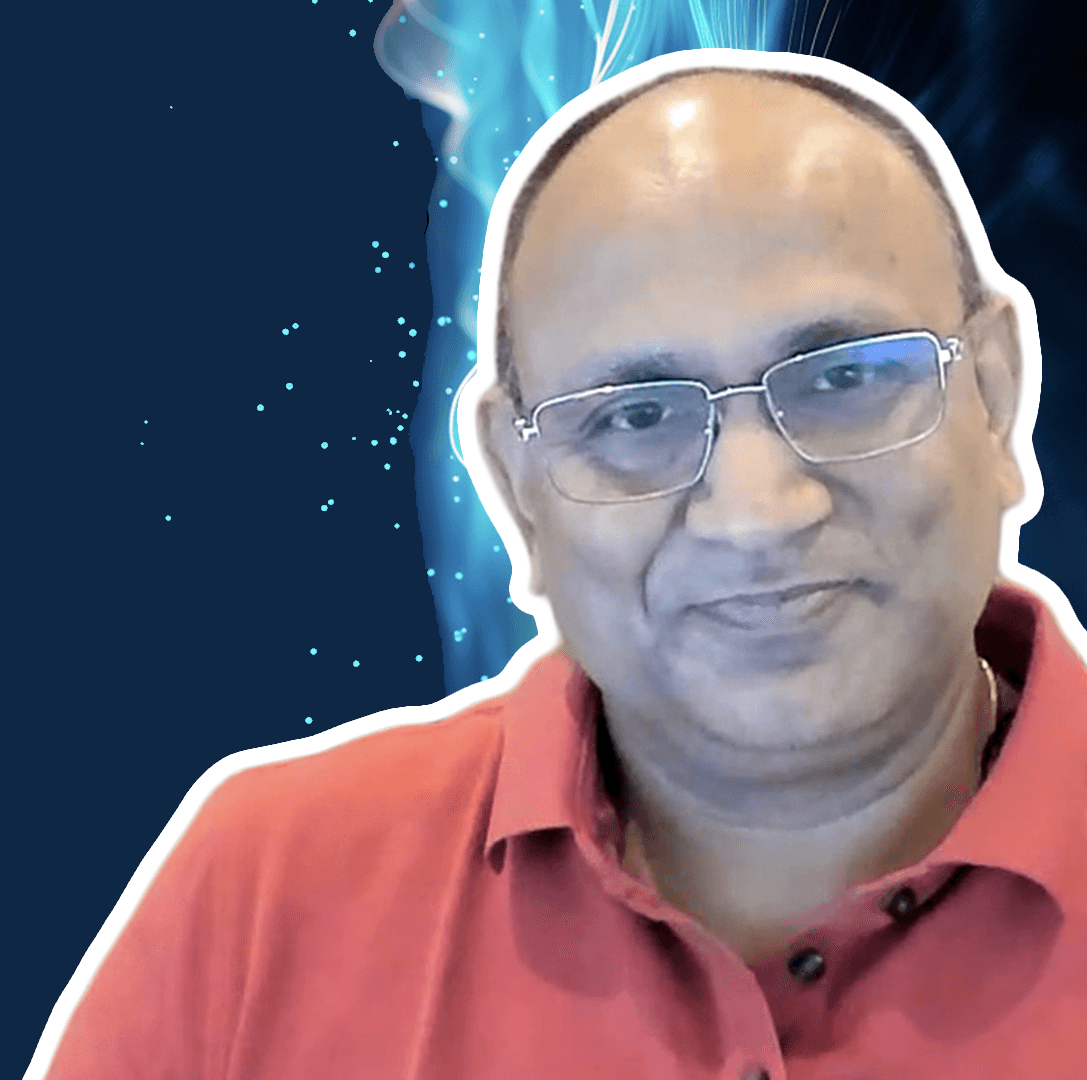
Manish Khadiya
VP of IT Enterprise Architecture & Cybersecurity at DIRECTV
Manish Khadiya is the VP of IT Enterprise Architecture & Cybersecurity at DIRECTV, with nearly 30 years of experience in technology leadership. He began his career in India with an engineering background and MBA before joining GE's IT leadership development program. Throughout his career, Manish has demonstrated expertise in enterprise architecture, digital transformation, and large-scale technology integrations across diverse industries including entertainment, manufacturing, and telecommunications.
Know Your Host

Matt Pacheco
Sr. Manager, Content Marketing Team at TierPoint
Matt leads the content marketing team at TierPoint, where his keen eye for detail and deep understanding of industry dynamics are instrumental in crafting and executing a robust content strategy. He excels in guiding IT leaders through the complexities of the evolving cloud technology landscape, often distilling intricate topics into accessible insights. Passionate about exploring the convergence of AI and cloud technologies, Matt engages with experts to discuss their impact on cost efficiency, business sustainability, and innovative tech adoption. As a podcast host, he offers invaluable perspectives on preparing leaders to advocate for cloud and AI solutions to their boards, ensuring they stay ahead in a rapidly changing digital world.
Transcript Table of Content
00:00 – Intro to Cloud Currents, Manish’s role, and episode overview
08:35 – Joining DirecTV and being tapped to lead enterprise architecture and cybersecurity
13:59 – Balancing business continuity, cybersecurity, and innovation during the AT&T split
17:38 – Tease of deeper AI and GenAI discussion in the context of the roadmap
20:06 - AI Implementation Strategy, AI Security, AI in Cloud Infrastructure
30:00 – Mid episode deep dive section (e.g., architecture, operating model, or transformation lessons)
40:23 – Looking forward at the future and advice
Transcript
00:00 – Intro to Cloud Currents, Manish’s role, and episode overview
Matt Pacheco
Welcome to the Cloud Currents podcast where we explore strategies and technologies shaping the future of cloud computing and cybersecurity. I'm your host Matt Pacheco and I help businesses understand cloud trends to better help them make decisions about their IT strategy. I am the content marketing head at tierpoint. In today's episode, we're diving deep into complex world of enterprise architecture and the challenges of IT transformation at scale. We're joined by Manish Khadiya, VP of IT Enterprise Architecture and Cybersecurity at DirecTV, who brings nearly three decades of technology leadership experience across lots of the world biggest companies. He's led major initiatives across organizations like ge, NBC Universal, Facebook, just to name a few, giving him a unique perspective of the enterprise architecture, digital transformation and the challenges of technology integration during major corporate transitions.
So currently he's at DirecTV, spearheading some work on the infrastructure, cyber security and implementing cutting edge solutions which we'll get into. I bet you can guess what that means. And in today's conversation we'll explore topics that cover all of these great things. So thank you for joining us today.
Manish Khadiya
Hi Matt, thanks for having me. Really appreciate that.
Matt Pacheco
Awesome. So let's dive right in. I want to ask you, I want to start by asking my favorite question. Can you walk us through your career journey from where you started to where you are at right now?
Manish Khadiya
Sure, sure. Obviously that's the easiest question to talk about. So you know, as you mentioned, around three decades in the technology industry. So right out of grad school I started working india, I completed my education india and after that I joined at the ge, you know, entry level program, leadership development program for IT professionals that they run called an IMLP program, which is a great program where GE hires, you know, entry level engineering and technology professionals from different institutes and then, you know, give them exposure. With the six month rotations across multiple GE businesses and I started with them india, I saw multiple GE businesses like GE Lighting back in the day, different divisions of GE Capital or GE Finance at that point of time.
And also then one of my other rotation was to kind of work at the corporate headquarters out of Fairfield, Connecticut as well. And that's what brought me to the us and at the end of the program then you have an opportunity to pick a role within one of the businesses. They're kind of like a matchmaking process where different GE businesses would have different roles open up and then you interview and you get placed in one of the roles as part of that. I was lucky to get placed at GE Plastics out of Charlotte, North Carolina, which was my first role initially, which was starting as a business analyst. And it was a great experience there. I spent almost five years at GE Plastics where I did multiple projects. Like I was involved in a global ERP rollout.
So I got a chance to go and spend six months in Hong Kong and implement an ERP product for a process manufacturing business out of Hong Kong or the China division of GE Plastics. And then I got to spend some time, and then I moved into doing a little bit of data warehousing and salesforce effectiveness tools as well. And I got a chance to do that also globally, not only in the US but also in Europe. So like, we had a big division in Europe. We had a manufacturing plan out of a city called Bergen AB Zoom, about an hour and a half away outside of Amsterdam. So, so I got to spend some time there and kind of do some IT implementation of data warehousing and some related projects over there.
And then, you know, back in the day, GE was really big on Six Sigma, so that I got my GE Six Sigma Black Belt certification. I did a project around that as part of the certification as well. And after spending five years at GE Plastics, I got an opportunity to move to NBC Universal Entertainment division. And back in 2005, at that time, NBC had just acquired Universal Studios from I think MC Seagrams or mca, I forget which, who did they acquire it from. But there was a desire to kind of move like certain people from GE's like technology teams into Universal. So that gave me an opportunity to come over and move from Charlotte to Los Angeles serving the GE and join the home entertainment division. Back in the day, if you remember, everyone was buying DVDs and DVDs were a big business.
So I joined the home entertainment division again, leading their financial forecasting teams and all. And again my stint at NBC Universal, a long stint of around 14 years. I did multiple roles over there with increasing levels of responsibility, be IT running data warehousing and financial forecasting teams for the home entertainment business, or running the software development COE or. And then one of the key project that I'm really proud of during my time was to lead the integration, or IT integration, part of acquisition. So NBCUniversal had acquired DreamWorks Animation Studio in 2016, I think, or 2015, 2016 timeframe. And I was the IT leader. And then we completed that integration and acquisition in a record time, around eight months. We were able to do a lot there. So that was one great achievement there.
And at the same time, you know, I was leading the overall IT asset management function and a few other functions under the technology business operations umbrella there. So that was a great experience. And at that time I was tapped to come and join Facebook in Menlo park to help lead the vendor management function at the enterprise engineering division or enterprise engineering organization within Facebook, which is equivalent to their IT organization. And there the charter for me was to set up a team for doing third party spend management for almost $900 million of spend that Facebook had with third parties and manage the risk. So it was focused a lot around the vendor strategy, vendor performance management, and then also managing the risk or reducing the risk that was inherent in working with third parties back then. So that was a great experience.
Facebook in their hypergrowth phase at that time in 2018. And then at the end of two years there, then I kind of left Facebook and I moved back to my industrial roots at a company called Parker Hanifin. I joined them during the COVID days and that was my pivot back into core technology function. And I started leading the enterprise architecture function at Parker, which was a great learning. Parker Hannafin, a great, you know, American manufacturing company with more than 100 years of legacy and, you know, and then a very proud culture of a lot of engineering innovation as well.
And I was lucky to get a chance to, you know, join them and kind of help with the digital transformation that was, you know, underway at Parker Hanifin in terms of revamping their core IT platforms like the ERP system and some of the other supply chain systems and also focusing on improving the digital capabilities for the business in terms of how do you serve your customers in more self serve digital fashion and improving the supply chain and connecting the supply chain to help with that as well. So that was a great experience. Then I got a chance to kind of play a divisional CIO role in the Parker Aerospace, which is a subsidiary of Park Hannofin. And after that came DirecTV directly. We came calling directive.
08:35 – Joining DirecTV and being tapped to lead enterprise architecture and cybersecurity
Manish Khadiya
We had been separated from AT&T and they were looking to kind of set up a new IT organization. As part of that I was tapped to lead the enterprise architecture function. And once I kind of spent a year understanding the architecture function, then I added the responsibility for the cyber security team which was again, were setting up our CyberSecurity function at DIRECTV from scratch as were separating from AT&T as well. And we have been on that path on that journey and I think we're making good progress and hopefully we'll have our complete Separation on the cybersecurity side, probably by middle of 26, and then some of the other entanglements that we still have with AT&T over the next couple of years.
Matt Pacheco
Excellent. We'll talk a little bit more about that. I just had another question about your journey. So you've worked across various industries, various companies. How have these experiences kind of informed your leadership style?
Manish Khadiya
So, yeah, my experiences across different industries has kind of made, you know, definitely had a big impact on my leadership style. Right. And one big thing has been the first of all, with any new business when I join, I need to understand and like, I have learned to be very flexible and be adapting to the situation and the scenario and the culture of the organization. Right. Your leadership style has to align with the overall culture of the organization to be able to influence, to be able to lead the teams and, you know, and as an IT leader, one of the big parts of your role is to not only lead your teams and kind of, you know, ensure the delivery, those are table stakes, but also influence your business partners, your, you know, peers within the IT organization.
And because it has an impact across the organization and each industry has their own cadence of business as well. Right. And a lot of legacy as well. And then that kind of not only impacts what strategies you create and how you execute in a particular business, but at the same time you also learn along the way the unique leadership like philosophy that some organizations, just as an example, some organizations like to buy a lot of software platforms from third parties, whereas certain organizations like to build those software because they really are very proud of their engineering skills. And it depends. Right. And then there is not the same answer that can apply to each scenario and across the industries. So that has been a big learning for me is to be flexible, to adapt, and then of course bring your IT skills.
Like having spent so much time, you have certain instincts that help you kind of guide you as you lead a particular team or an organization.
Matt Pacheco
Let's talk a little bit about this DirecTV @&t kind of separation and the implications of what that means for your IT department at directv. So can you give us an overview of some of the challenges that you face in your line of work as it relates to this split on your infrastructure?
Manish Khadiya
Yeah, no, definitely. So when I came at DirecTV about three years ago, were kind of in the early stages of starting to separate from att and then some of the challenges that we have faced along the way. First of all, there was a very tight integration. That means you have to kind of dive into a lot of deep details to start separating from to have a successful separation. And also that means there is a lot of intermingling or commingling of business processes, commingling of your IT portfolio, even your IT infrastructure. And when you're part of the ATT, you get to leverage the scale of AT&T. AT&T is a significantly large company. They have a lot of scale, a lot of very mature processes that you leverage and you get used to it.
But when you starting to separate one, you get an opportunity to tune or set up those processes the way you want it more tuned to the DirecTV needs. Secondly, but at the same time it means that you're starting from the ground up, which is exciting. But at the same time it means that you have to mature very quickly as well because your users are expecting certain level of maturity from the processes that they're used to with at&t. But then as you're setting up your own processes, you not only want to kind of reach that same level and maybe even do better at times. So because as a IT professional over a long time, you don't get a lot of opportunity to set up these processes from the ground up or setting up the technology stack from the ground up.
A lot of the times you go to an organization and you see a lot of legacy technology, you inherit a lot of legacy as well. So in that sense, I think the challenge has been to adapt to your new processes and your new technology stack to the needs of directv and at the same time ensure there is no adverse impact to your business operations that are critical to our business. Of course.
13:59 – Balancing business continuity, cybersecurity, and innovation during the AT&T split
Matt Pacheco
So it sounds like a huge undertaking, kind of starting on your own. Exciting, as you mentioned, but also daunting. How do you balance things like business continuity, cybersecurity, your innovation with migrating away from those AT&T systems?
Manish Khadiya
Yeah, no, that's a great question. So the balance has to be like in terms of having a clear roadmap and a clear thought process. So I think you spend a lot of time upfront in planning and creating a roadmap. So that of course, and the planning, it's a multi year plan. So it's not that once you make a plan, it doesn't shift. Of course, as you go along, things change and you make the changes. But the whole exercise around the upfront planning is very useful to understand the dependencies that have to be considered along the way and at the same time be able to prioritize what are the critical, let's say milestones that you need to hit or the critical services that need to get transitioned to enable our business goals.
Ultimately, it is a function which enables our business partners to achieve their goals or business goals. And those are achieved with the help of business, sorry technologies that we provide which enable the business processes. So as you start planning for that transition, you have to keep in mind the business goals that our business partners want to achieve and how we are contributing to that. And then at the same time, you kind of look at your IT goals of migrating or transitioning away from the AT ecosystem as well. So that balance is achieved by making sure first you're prioritizing the right things which are helping you meet your business goals, and then kind of making sure that you identify the critical underpinning services that are needed to enable those goals.
And how can you go faster, do better, and do it in the most efficient manner to achieve those business goals.
Matt Pacheco
And you mentioned a roadmap. I can imagine this whole AI evolution recently, probably throwing a wrench into a lot of roadmaps or adding a little more complexity because it's like how can we integrate this new technology into the things we're doing? So I can't imagine that's been easy, at least in the last year and a half. Yeah.
Manish Khadiya
And no Gen AI, of course, a great new technology which is obviously exciting and has opened up so many more avenues for us to do things differently within IT as well, and within the business environment as well. So that has definitely made an impact on the roadmap. And I look at it as a net positive. Right. In the sense that it has opened up so many avenues for us to get more efficient and do it faster as well. Right. Some things which used to take weeks to do, now you can do it in hours or days. And of course that means that you need to upgrade your skills and you need to learn the responsible use of that technology within your organization without increasing your risk in your environment as well. But at the same time, yeah, that definitely impacts our roadmap.
But at the same time I look at IT as a net positive and a very exciting option that has been made available. As a technology and IT professional. I love that to kind of be able to incorporate that into our roadmap and be able to even do better than what probably our business partners are expecting.
17:38 – Tease of deeper AI and GenAI discussion in the context of the roadmap
Matt Pacheco
Excellent. And we'll get into AR in a little bit. I have a bunch of questions for you on that, but I do want to ask you one more question as it relates to your kind of separation when it comes to kind of, you're part of AT and T, you probably had vendor relationships with certain cloud providers. How has that changed and how do you evaluate those relationships as you moved from AT&T infrastructure to DirecTV's own infrastructure?
Manish Khadiya
Yeah, yeah, no, yeah. Again, as I said, like AT and T, great organization of significant scale benefits that we get being part of that umbrella now as we move away. Yeah. There are certain considerations in terms of probably we lose some of the scale benefits, but at the same time we are trying to consolidate because the number of vendors that we work with, reducing the footprint of technology vendors that we have in our environment because we don't need that kind of scale or we don't have that kind of scale within directv and then focus on the few key relationships that we think are our best long term partners and how do we choose them?
We kind of choose those partners based on not only where our at least IT roadmaps and IT plans are, but at the same time where we see the sense of that partnership where partners are willing to step up and act as genuine partners and work with us in helping us achieve what we are trying to achieve. So to your question, specifically how we choose those vendors and partners, we kind of have had relationships before, but as we set up our own, let's say agreements and our own legal frameworks under which we operate, we look at how the alignment is with our long term technology roadmaps and what we are trying to do and at the same time also look at where we see the best partnership opportunities.
Because again, in technology, as anyone who's working in that will know, you're very dependent on third parties for different infrastructure, meeting your infrastructure needs or meeting any kinds of needs. And it is very important to not only treat them as vendors because these are long term partnerships that you establish and it's, and it has to be mutually beneficial to both the parties.
20:06 - AI Implementation Strategy, AI Security, AI in Cloud Infrastructure
Matt Pacheco
So true. Okay, we can talk about AI Now. I've been, I've been dying to ask you, so how are you implementing AI in your operations potentially internally, potentially for customers? Can you cover all of those scenarios?
Manish Khadiya
Yeah, sure. So, so you know, the way we look at AI within our environment, of course there are three kind of main, let's say categories. The way we look within an enterprise that AI can help us. One is in terms of making us more productive and more efficient or improving our customer interactions, the quality of interactions and providing better information to our customer. The third is looking at creating new revenue streams probably which would not have been possible, you know, so far. And then so far we have focused on the first two categories a lot. Right. So within our operations, for example, you know, one of the proven use cases has been around leveraging AI to do better software programming. So you know, we have looked at driving productivity and within our software engineering teams leveraging AI tools, that was an easy win.
And we have already achieved, I would say significant cost reduction, almost 15% productivity benefits which have translated into hard dollars for us. And also we have enabled tools for our knowledge workers within our organization which then has led to productivity improvements and has improved our employee engagement scores. It's very difficult typically to measure have a clear metric around improving employee productivity, but we definitely have seen improvements in employee engagement scores within the organization. And the excitement, sometimes it's about the metrics, it's about the excitement and the cultural impact that a technology can make.
Because suddenly like when someone is able to leverage a tool like ChatGPT or you know, to do something, do a, like analysis on a particular set of data, instead of taking them days or they could do it in minutes, they feel really good about it and they feel, you know, that they can then focus on the more value added part of the job. So we have definitely achieved that. Now from a customer perspective, we have definitely leveraged AI to improve our agents. We have a lot of call center agents. We are a big B2C company. So we get lots of calls into our call centers. And how do we make our agents more efficient and provide them with better information at the right time?
We have seen that benefit where we have enabled Genai for our call center agents to help them get better and more efficient. And at the same time we have even leveraged AI enabled chatbots and virtual agents as well to help improve our customer experience where they can do more self service and reduce some of the frustrations that customers experience when dealing with your traditional IVR systems as well. Now we are in the early innings of those. We have seen some very positive results. And also as we go deeper into the AI, we have a slate of initiatives that we are exploring to go after the third pillar around how we can generate more revenue like some of our ads.
Some teams within our ad sales business are doing something really exciting things in that, in better ad targeting and better ad positioning and things like that. And then we see that getting AI incorporated into our products in the future, better recommendation engines and things like that. So we have a very exciting slate of features that we are planning for the future as well.
Matt Pacheco
Are there Any security concerns or consideration when implementing AI solutions across enterprise?
Manish Khadiya
Of course security is at the foundation of everything we do within it and especially with AI we have seen all heard of, seen of famous cases, be it Samsung or Air Canada and things like that, where AI can have downsides if not managed and implemented with proper hygiene I would call it, or cyber security hygiene. So yeah, definitely there are risks with leveraging AI first of all around exfiltration of your company and confidential data and we deal with a lot of customer personally identifiable PII data as well. So we make sure that any of our solutions that are going to leverage AI, we do an in depth security and architectural reviews to make sure we are not exposing any data which we don't want to. And also it is not even used for training some of the LLMs.
We don't want our customer confident data to be used for training LLMs as well. So we have been very diligent in that sense and our organization understands this. So one of the great things about our culture is that everyone security is not just cybersecurity team responsibility, it's everyone's responsibility. And I feel that our culture recognizes that and supports that very effectively as a company. So we have seen a very responsible use of AI within the enterprise.
And even when we have kind of incorporated new governance processes, be it around introducing any new AI technology or enabling new AI features in existing platforms that we have, our business partners or technology users have been very supportive of that and very willing participants and they have come to us and asking for help, which is very heartening for us because that helps makes our job easier at the end of the day. So, so we have been very diligent about it. We have been educating our, you know, teams as well on the responsible use of AI in terms of, you know, making sure you have all the cybersecurity hygiene in place as well.
Matt Pacheco
Do you, do you see on the other side of the business, do you see AI being something that could help enable cloud infrastructure management or things like that? Like we already have machine learning, it's existed forever, it falls under the AI umbrella. But do you see generative AI or any of these new technologies actually helping on the cloud management front?
Manish Khadiya
Yeah, no, definitely. I think as you rightly said, right, cloud infrastructure management has become very mature. You know, the hyperscaler will be it Amazon or be it Microsoft have done a great job of providing tools to help manage those environments. But what I feel from a cybersecurity perspective there is a lot of control that as an IT Organization which is the user or like the administrator of those infrastructure in the hyperscaler environments, AI can help us get better at analyzing any gaps there as well. Right. Like be it around misconfigurations or be it around any exfiltration opportunity that might be there. So I feel that AI will definitely make an impact from a cybersecurity perspective.
We are already starting to see that where cybersecurity tools will help us analyze simple analysis of logs faster and identifying the potential incidents and preventing them and even helping remediate those faster. So I feel that way also. And also, obviously one of the things that you have to be very careful in a cloud infrastructure is to manage your costs and your manage your footprint, otherwise it could go out of control pretty quickly. So I expect pretty soon. And we still in early innings there probably where you could fine tune your footprint with the help of AI tools which are looking at the data, understanding the patterns a little better and helping you manage those more effectively from probably from what you're doing right now.
Matt Pacheco
Excellent. You said, you said two things that I want to talk about. First, cybersecurity and second, cost optimization. I love to talk about cybersecurity because I'm really. So we talked about the infrastructure aspect of separating from AT&T and becoming your own entity, but I'd like to ask you, are there unique cybersecurity challenges, specifically security, as it relates to that transition? I'd love to dive into that a little bit.
Manish Khadiya
Yeah. So no, definitely. So first things first, right? AT&T, a very important organization for the whole US infrastructure just because of the shared networks that they manage and support. So one of the challenges that we have been working through has been how do we make sure that DirecTV's where we are still dependent on ATT for cybersecurity, let's say, for functions and services? How do we strike that right balance about meeting the needs that the ATT cybersecurity teams have? But they don't become too onerous for us at DirecTV as well. And we have a very good relationship with the cyber security teams at the att and we constantly work with them to achieve that balance. Right. And the same thing has been as we have set up our own services, right?
30:00 – Mid episode deep dive section (e.g., architecture, operating model, or transformation lessons)
Manish Khadiya
How do we make the program our own, which is more suited to our needs? And the challenge has been to make sure that we do not kind of just incorporate everything because what we are used to under the AT&T umbrella are very mature practices. But at the same time they are not all suited for DIRECTV So how do we change those practices and re engineer those processes and practices more to suit it towards the need of the DirecTV business, but at the same time make sure that we don't compromise on the overall security needs of it. It doesn't mean that you just kind of don't have any processes or you become lax, but it is more on being able to provide that flexibility that our business partners need.
Because again, entertainment industry is going through a significant reset or is at a significant inflection point. And that means we have to be very nimble and then be fast to respond to the market and to our competitive landscape. And then that means our cybersecurity policies have to reflect that and our posture has to reflect that as well. And so that has been an interesting challenge, but the exciting part has been that this gives us an opportunity to set up a technology stack right from the ground up, which means you can get the latest and the greatest tools and also implement them in a way which you now understand much better and you can forecast for the future as well, or you can set yourself up for the future as well.
Because typically what happens a lot of the times when you go into an organization, you inherit a lot of legacy technology and tech debt as well. And sometimes the return on investment on some of those improvements is not easy to achieve and it doesn't get prioritized effectively. So as we have migrated away from the ATT cybersecurity environment, we have had that benefit of making the program more suited for directv needs and be flexible. And we have enabled that with choosing the right tools as we have set up the stack from the ground up.
Matt Pacheco
It's kind of exciting, right? You get to do it the way that works best for the business and the best for your customers. That's really cool.
Manish Khadiya
And luckily, technology tools have improved significantly over the years and they provide those flexibilities and those opportunities and you get to pick them and work with them, which is really good.
Matt Pacheco
Excellent. Let's talk about cost optimization now too. So what are your strategies for identifying opportunities for cost reduction and trying to balance those costs? Because one, you're going through this separation and this kind of establishment of your own infrastructure, your own cybersecurity piece of. How do you, how do you identify your cost opportunities?
Manish Khadiya
Specifically, let's say on the cloud infrastructure side, we have that opportunity as again, as we are migrating our applications, our business processes and you know, to the new, let's say DirecTV Cloud and DirecTV Infrastructure, we have had the opportunity to resize it right. A lot of the times again, your legacy infrastructure is set up with certain sizing requirements in mind. But for whatever reasons that sizing does not maybe may have been over engineered. So one of the things that this separation has given us an opportunity is to right size our infrastructure environment and also relook at some of the existing infrastructure. It's not that we did not have any infrastructure at all, but it has given us an opportunity to relook and re size those things, which has helped us in reducing our costs and footprint.
And then again, we are a declining business right now, right? So overall DirecTV, you know, because of the cord cutting phenomena and all, DirecTV has been a declining business. So we know that at least for the next couple of years how we need to size it. And with the modern infrastructure environment we have a lot of flexibility. So the biggest opportunities have been around, right? Sizing our environments about leveraging all the latest tools for managing those footprints. Because once you have a certain configuration to go back and do the chain management on those configuration in a particular cloud infrastructure environment, you get logged into certain sizing. But now that you are setting it up again from the ground up and resizing it, you can build in that flexibility into your application.
And sometimes you can get an opportunity to refactor those application, leveraging containers and all more effectively and sizing them effectively and also setting up your infrastructure in the same way. And I feel that Genai will even help us further in that because once we start looking at certain tools in that space, being able to do a better job of automating that, resizing that we constantly need to do and forecasting as well, that would definitely be of benefit to us. And outside of let's say the cloud infrastructure in other areas, as we have migrated away from att, we've had the opportunity to simplify our environment. Like instead of a business process that is being supported by 10 applications, can we do it in let's say five or even lesser?
And because again ATT, large organization, they had a different perspective and different set of needs and directly we as a business has a very different set of needs. So we definitely have that in mind. And enterprise architecture plays a key role in that. As we design, pick the technologies, design the solutions, simplification has been on the top of our mind is one of the key goals we try to achieve with those because that has a direct impact on the cost of the solution and also the ongoing complexity that it introduces into your environment, which then again has impact on your sustaining cost as well. Or your OPEX as well. So we keep that as a key guiding principle for our enterprise architecture and our solution architecture teams.
And also as we are evaluating new technologies as well, when we are migrating services, when migrating applications, we are thinking about always that, hey, why don't we leverage what we already have before we introduce any new technology or new product or new software into our environment? And that has helped us achieve significant benefits. And even when we have existing platforms, when we are renewing our agreements and all, and as we do separate from att. Right. Obviously when we're dealing with third parties, you have a lot of software and different kinds of agreement that you have to renew and you set up specifically for DirecTV. You get an opportunity to right size them and only pick what you need and achieve those cost optimization benefits by. Right. Sizing them.
Matt Pacheco
Very interesting. You talk about new services and technologies. I'm really curious because what I'm hearing is that a lot of these AI companies and AI services, they kind of get you hooked at first and then the price tag goes up potentially. How are you and potentially other businesses kind of thinking through accounting for that and the reliance on some of these services as they become sort of unpredictable in some instances because they're trying to monetize and prove their value and do the things they need to do as businesses.
Manish Khadiya
No, you're absolutely right. Right. We are in the, what should I say, the hyper, the hype cycle phase or the upward graph of the gen AI technology phase, where a lot of venture capital funding is subsidizing primarily all the gen AI technologies right now. And we are aware of that and we are keeping that in mind. And how do we address that? We definitely want to leverage the technology and get the benefits. And then we do know that at some point that increase will come, or once you're hooked onto it, that increase will come.
And we are trying to bake that into our contracts to make sure that our commercial agreements are in a way that as long as we are getting the business benefits, right, the return on investment that we are making, then we are kind of in business with that Gen AI partner. And if we are not seeing the benefits anymore because of, let's say, the price increase, or maybe we have reached the marginal benefit scenarios or edge cases where probably it's no longer beneficial for us, then we will not expand the usage of that. It's not that we are kind of locking ourselves into scenarios where we have to continue to use it. So we are trying to build that flexibility into our agreements.
And luckily the partners that we have, they are willing and flexible to offer those contractual constructs to us where right now it provides them the growth and we get the benefit. But at the same time, it is not just like a short term thinking. There's a longer term aspect to it. And that's where picking the right partners and right companies to work with is very important. Because, yeah, we understand everyone has to make a profit at the end of the day, but at the same time it has to be mutually beneficial and how do you achieve that? And if, let's say the benefits stop accruing, then we should have that flexibility to make a change and pivot away from that.
One of the things that has happened is as part of our separation, that has given us the confidence as we have pivoted away from a lot of technologies that, yeah, sometimes there is an inherent inertia in terms of doing that change. But now that we have had that track record over the last three years of introducing new technologies, pivoting away to new technologies and platforms, we think we have that muscle to be able to do that and do that successfully.
40:23 – Looking forward at the future and advice
Matt Pacheco
Excellent. Thank you. Few more questions I want to ask you about the future, kind of the fun segment of the show. What are some of the emerging technologies that you're most excited for in your line of work?
Manish Khadiya
In my line of work, some of the key things, obviously by default, gen AI kind of comes along as the one. And then even within Genai, the constant step improvement that you're seeing, right, like every new release of ChatGPT 5 or something like that, or new model from Gemini or something like that. So the improvements that are coming are really exciting. Obviously agentic AI is the buzzword and then we are playing around with it and trying to explore it. I think there are no clear winners there, but there's definitely a lot of potential there. So we feel that, or at least I feel that in the future, agentic AI will play a big role in a lot of our platforms, applications, our business processes for sure.
Now beyond that, I think in the cybersecurity space, we will see a lot of improvements in terms of not only finding that needle in the haystack because a lot of the times in cybersecurity, your job is to find that one kind of signal which is not consistent with everything else, and then being able to raise the right flag, so reducing the number of false positives that your tools are telling you. And I feel that there will be definitely improvements now. It'll leverage Genai underneath or it will get better with Automation, those are definitely there now. The other thing also I'm thinking about feels like quantum computing is something that is on the horizon, but I think it's still like four or five years away and it will get better.
But I think the use cases and let's say the killer use cases will come soon, probably in the next couple of years. So that is something that keep an eye out. Then also the technologies that you think about are around, not visual, let's say identification, smart glasses and then smart entertainment that is coming along. So that opens up so many opportunities. I'm really excited about the Meta Quest set of glasses. Right. They keep getting better with every iteration. Even Apple had their headset but didn't go very well. But knowing Apple, I think they will work on it, they'll get better with time. And even if you think about it, Google glasses came along probably way ahead of time, right. And at some point I think Google will come back to it and once the market develops, so I think that space will mature.
We have such big companies, powerful companies like Meta, Google, Apple kind of focusing on that market. So that will improve, open up more avenues for us to do things differently within technology. And then the whole thing, you know where I think with the autonomous driving and you know, transportation, the changes that are coming along, I foresee that those will as they are maturing, you know, they're getting better and better every day. They will not only make it easier, you know, just a simple fact that hey, you know, if you're not driving, let's say you get to the point where you don't have to have a driver holding a steering and a, you know, self driving car, not the Waymo taxis which you don't have need or driver. That is already proven.
What opportunity does that open up for us as an entertainment company to provide entertainment to the consumer or to the driver itself? And also how can we leverage those sensing technologies at scale in our environments as well? And then of course you have to be all that has to be balanced with data privacy concerns and things like that. Because facial recognition and all those are great technologies. Like as you go into the TSA right now, they are making sure just looking at your face and you don't have a look at documents and all and they let you go through, right? So those technologies have gotten so much better. You know, probably they were there but now they become so much mainstream. And I foresee that like for example, in entertainment, can I track, you know, what people are doing while watching tv?
What are they focusing on? Because second Screen phenomena. Are they looking at the phone? Are you looking at the content that is being provided to you? So those are things that I foresee will have a big impact for the future and then will open up more avenues for us.
Matt Pacheco
Yeah, there's a lot of fun things coming. The autonomous vehicles are really cool. I was just in Los Angeles recently and saw the Waymo. Was it Waymo?
Manish Khadiya
Waymo.
Matt Pacheco
There's cars everywhere. I'm like, what do people do while they're sitting in the back? Do they just sit in awe? But that's kind of cool opportunity for DirecTV. Imagine it's in flight. Entertainment just in the car. That's exactly kind of cool.
Manish Khadiya
Funny. Like, to address that, we, you know, our business did actually announcement recently. We have kind of now focused on a, what we call the moving business. Now we calling DirecTV business for like movement where we will focus on providing entertainment to people while they're, you know, in motion or when they're moving around. So yeah, you're right. Like, and as you must have seen, you tend to set a lot in the traffic. Just the, to me, if you're sitting in the back of a car, you're not focusing on driving. Hey, you know, entertainment is a possible option and that opens up an avenue for someone like DirecTV to provide that content to that audience as well.
Matt Pacheco
There you go. It's awesome. Turn the frustration of sitting into traffic into something people look forward to. Maybe not. Depends on where you have to be at what time. But that's, that's pretty cool. That's awesome.
Manish Khadiya
Entertainment is limited to audio. Like imagine adding the video component to it. And you know that adds a lot of a powerful dimension to it.
Matt Pacheco
Well, they can always watch us or listen to us on this podcast. Awesome. One last question for you as we wrap. Quick, quick answer 1. Any advice you would give to any other IT leaders who are managing complex technology transitions like yours?
Manish Khadiya
The advice is obviously first of all, as I said at the beginning, right. Taking the time upfront to do the planning and analysis is really important because that will help you kind of work out some of the gaps that you have, let's say, and be able to address them. But at the same time, you know, it's always important to remain flexible because your plans could be very, these are long term plans, these are not like short term plans. So there will be changes there changes constant. There will be changes along the way. But as long as you understand the critical components of your plan, you are able to pivot easily, faster and guide the organization along the way and answer those critical questions like, hey, what if I do this? What will be the impact to you? Right?
If I don't migrate this application in this, you know, year and do it two years later, what does that mean for us? And as long as you understand, spend that time upfront in planning, you know, doing the separation planning, you will be able to, you know, provide that what if scenario answers and also be able to change and respond quickly to the changing environment as well.
Matt Pacheco
Excellent advice. Well, Manish, thank you so much for chatting with us today. We learned a lot. It was a lot of fun. We talked about really interesting stuff. So I appreciate you being on the show.
Manish Khadiya
Matt. No, thanks for the opportunity. I really appreciated this conversation and thank you very much.
Matt Pacheco
Yeah, of course. And thank you for everyone for listening and watching today. We appreciate you tuning in. Stay tuned for more episodes of Cloud Currents, wherever you get your podcasts on YouTube. And we'll be back soon with more fun and interesting content. So thank you and have a great day.